

Bipolar Disorder Clinical Trials
What Is Bipolar Disorder with Depression?
Bipolar disorder is a mental health condition that involves shifts in mood, energy, and activity levels. While some people experience periods of elevated mood or increased energy, many also go through depressive episodes that can feel overwhelming and long-lasting. During these phases, individuals may notice persistent sadness, low motivation, fatigue, difficulty concentrating, sleep changes, or loss of interest in daily activities. These emotional ups and downs can affect relationships, work performance, and overall quality of life.
The good news is that with the right care and support, many people learn to manage symptoms and regain stability. Ongoing bipolar disorder clinical trials continue to explore new approaches that may offer better relief and improved long-term outcomes. Research in bipolar depression clinical trials is especially focused on addressing the depressive phase, which is often the most challenging part of the condition.

STUDY
Investigating a Potential New Treatment Approach for Bipolar Depression
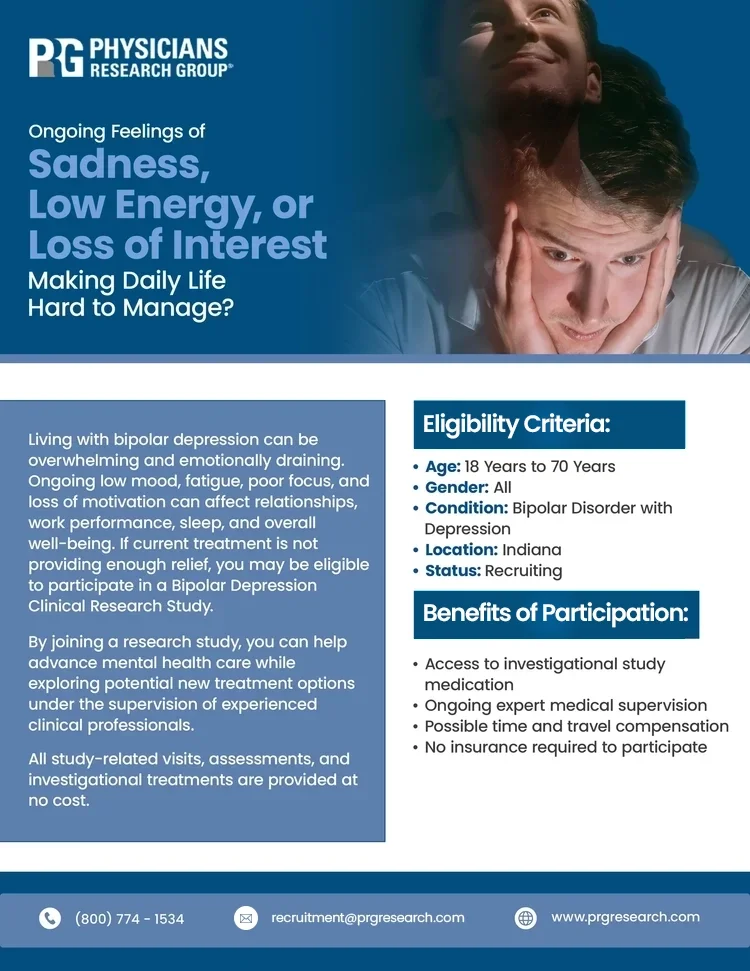
This bipolar disorder depression research study is designed to evaluate the safety, tolerability, and effectiveness of a study medication in adults experiencing depressive symptoms related to bipolar disorder. The goal is to better understand how participants respond to this investigational treatment for bipolar depression over time while carefully monitoring overall mental and physical well-being.
Participants enrolled in this bipolar I or II major depressive episode trial will receive close medical supervision, structured mood assessments, and consistent follow-up visits with an experienced clinical team. These bipolar disorder clinical trials in Indiana aim to collect meaningful data that may shape future treatment options while prioritizing participant comfort and safety. Taking part may provide access to innovative therapies, expert care, and the opportunity to contribute to advancements in mental health research.
Age
18 Years to 70 Years
Location:
Indiana
Status:
Recruiting
Condition
Bipolar Disorder with Depression

What to Expect in a Bipolar Disorder Clinical Trials?
In a bipolar disorder clinical trial, participants can expect a structured and supportive research experience. The process typically begins with a screening visit to confirm eligibility and review medical history. Once enrolled, participants may receive the study medication and attend scheduled clinic visits for mood evaluations, questionnaires, lab tests, and wellness checks. These visits help researchers understand how symptoms change and how well the study treatment is tolerated.
A dedicated research team remains available throughout the study to answer questions and ensure participant safety. By joining, individuals not only gain access to attentive medical monitoring but also help advance knowledge that may improve care for others living with bipolar depression in the future.
Frequently Asked
Questions
-
Adults between 18 and 70 years old who have been diagnosed with bipolar disorder and are currently experiencing depressive symptoms may be eligible. Final eligibility is determined during the screening process.
-
Participants will attend regular clinic visits for mood assessments, health evaluations, and progress reviews. They may receive the study medication and will be monitored for symptom changes and any side effects.
-
Participants may receive access to an investigational treatment, consistent expert supervision, and structured mental health monitoring. Their involvement also contributes to research that may lead to more effective bipolar depression treatment options in the future.