

Acne Clinical Trials
Actinic Keratosis: Understanding Sun-Related Skin Damage
Acne is a common skin condition caused by long-term exposure to ultraviolet (UV) radiation from the sun or tanning beds. It appears as rough, scaly, or crusty patches on the skin that may be red, pink, skin-coloured, or brown. These spots often develop on areas frequently exposed to the sun, such as the face, ears, scalp, neck, forearms, and hands. Acne lesions may feel dry or sandpaper-like and can sometimes be tender or itchy. Although they are considered precancerous, meaning they are not skin cancer yet, some actinic keratoses can develop into squamous cell carcinoma if left untreated.
Living with acne can be concerning, especially because of its link to sun damage and potential risk of skin cancer. Visible patches may affect confidence, and recurring lesions often require ongoing treatment and monitoring. People with fair skin, a history of sunburns, or frequent sun exposure are at higher risk.

Participate Today!
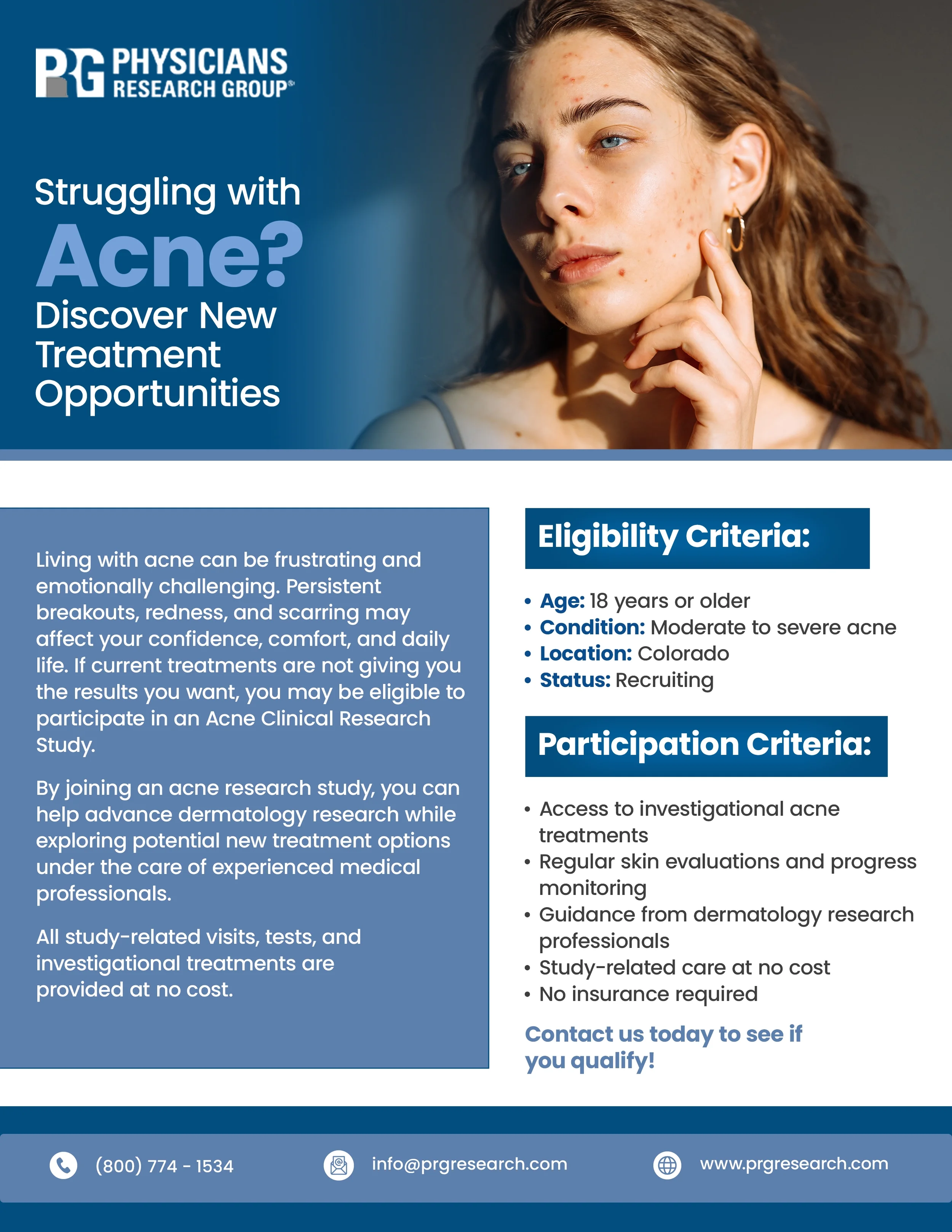
STUDY
Targeting Sun-Damaged Skin with Innovative Research Care
People diagnosed with acne may have the opportunity to participate in Acne Clinical Trials at Physician Research Group. These studies are designed to evaluate potential new treatments that aim to improve sun-damaged skin lesions while closely monitoring safety and treatment response. If you have rough, scaly patches caused by sun exposure and are interested in joining an Acne Clinical Trials in Colorado, you can complete a study interest form. A member of the research team will contact you to answer your questions and help determine whether a study may be a good fit for you.
Those who qualify and choose to participate in Acne Research Study will receive a clear schedule of study visits, timelines, and details about what participation involves. Taking part in a clinical trial is completely voluntary, and you are free to withdraw at any time.
Age
18 years and older
Location:
Colorado
Status:
Recruiting
Condition
Acne
What Happens During an Acne Research study

Living with Acne can be uncomfortable and concerning. These rough, scaly patches caused by long-term sun exposure may affect how your skin looks and feels, and in some cases, they can develop into more serious skin conditions over time. If you are exploring treatment options for acne, a clinical research study may be something to consider. If you decide to participate in an acne research study, you will be cared for by experienced doctors and research professionals. They will closely monitor your skin, treatment response, and overall health throughout the study. All study-related visits, evaluations, and investigational treatments are provided at no cost.
If you appear to be eligible, you may be invited to attend a screening visit at a nearby research centre. During this appointment, the study team will explain the study in clear, easy-to-understand language. You will have the opportunity to ask questions and will be asked to review and sign an Informed Consent Form before any study-related medical procedures begin.
Frequently Asked
Questions
-
An acne clinical research study is a carefully designed medical study that evaluates new or investigational treatments for acne. These studies help researchers learn how safe a treatment is and how well it works before it may become widely available.
-
Participant safety is the top priority. Acne clinical studies are reviewed by ethics committees and monitored by medical professionals. You will have regular check-ups so the study team can track your skin and overall health.
-
You may see improvement in your acne, but this cannot be guaranteed. Even if your acne does not improve, your participation helps advance research and future treatment options.