
Key Takeaways
Heat rash develops when sweat gets trapped beneath the skin, causing small bumps, itching, or a prickling sensation.
Eczema is a chronic skin condition that causes dryness, inflammation, and recurring itchy patches.
Heat rash often improves within a few days, while eczema may require ongoing skin care and medical treatment.
Heat, sweating, and certain skincare products can worsen either condition, but their underlying causes are different.
Persistent, painful, or worsening rashes should be evaluated by a healthcare professional.
Quick Answer:
Heat rash and eczema can cause similar skin symptoms, including itching, irritation, and small bumps. However, they develop for different reasons. Heat rash occurs when sweat ducts become blocked, trapping sweat beneath the skin. Eczema, particularly atopic dermatitis, is a chronic inflammatory condition associated with a weakened skin barrier.
Heat rash usually improves when the skin stays cool and dry. Eczema can flare up repeatedly and often requires a consistent skincare routine and medical treatment.
Introduction
An itchy rash after spending time outdoors may be related to heat and sweating. However, recurring dry patches or irritated skin may point to a different condition.
Because both conditions can cause discomfort and changes in skin appearance, knowing what to look for is important. Understanding the difference between heat rash and eczema can help you recognize possible triggers, choose appropriate skincare, and decide when to seek medical advice.
Although they may look similar, these conditions have different causes, symptoms, and treatment approaches.
Understanding Heat Rash
Heat rash, also called prickly heat or miliaria, develops when sweat ducts become blocked. Instead of reaching the skin's surface, sweat gets trapped beneath it, causing irritation and small bumps.
It commonly develops in hot, humid environments, especially when a person sweats heavily or wears clothing that does not allow the skin to breathe.
What Does Heat Rash Look Like:
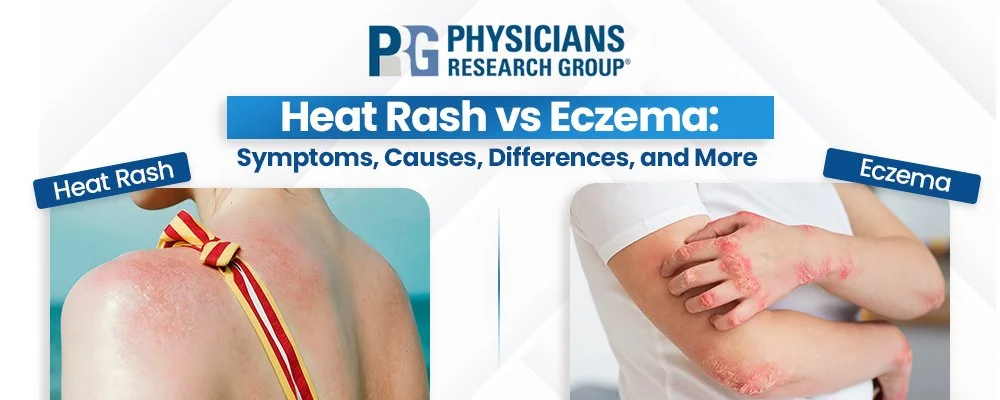
It usually appears as clusters of tiny raised bumps or small, clear blisters. Depending on the type, the bumps may be red, pink, white, or similar to the surrounding skin.
Other symptoms may include:
An itchy or prickling sensation.
Mild swelling or irritation.
A stinging or burning feeling.
Small fluid-filled blisters.
Heat rash commonly affects the neck, chest, back, underarms, groin, and other areas where sweat collects. It often improves within a few days as the skin cools down.
Understanding Eczema
Eczema refers to a group of conditions that cause skin inflammation, dryness, and itching. Atopic dermatitis is the most common type.
People with this condition often have a weakened skin barrier. This makes it harder for the skin to retain moisture and protect itself from irritants. Eczema is not contagious and can affect both children and adults.
What Does Eczema Look Like:
The answer can vary depending on age, skin tone, and the severity of the condition.
Eczema may appear as:
Dry, rough, or scaly patches.
Inflamed areas that feel itchy.
Brown, purple, gray, or darker patches.
Small bumps or blisters.
Cracked or thickened skin from repeated scratching.
Common affected areas include the hands, face, neck, elbows, and knees. Unlike most cases of heat rash, eczema can persist for longer periods and return even after symptoms improve.
Also Read: Scalp Eczema vs Psoriasis: Symptoms, Causes, and Treatment Differences
What Causes These Two Skin Conditions?
The causes of heat rash and eczema are not the same, although certain environmental factors can affect both.
Heat rash develops when sweat cannot reach the skin's surface because of blocked sweat ducts. Common contributing factors include:
Hot and humid weather.
Excessive sweating during exercise.
Tight or synthetic clothing.
Prolonged exposure to warm environments.
Skin folds where sweat can collect.
Eczema develops through a combination of genetic, immune system, and environmental factors. Common triggers that may worsen symptoms include:
Family history of eczema, asthma, or allergies.
Harsh soaps, detergents, and fragranced products.
Dry weather and sudden temperature changes.
Excessive sweating and heat.
Stress and environmental irritants.
Heat and sweating can aggravate eczema, but they do not cause the condition itself.
Heat Rash vs. Eczema: What Are the Main Differences?
The difference between heat rash and eczema becomes clearer when you compare their appearance, triggers, and duration.
| Feature | Heat Rash | Eczema |
|---|---|---|
| Main cause | Blocked sweat ducts | Skin barrier and immune system factors |
| Appearance | Small bumps or blisters | Dry, inflamed, scaly patches |
| Itching | Often prickly or stinging | Can be persistent and intense |
| Common triggers | Heat and sweating | Irritants, dry weather, and other triggers |
| Duration | Usually a few days | May persist or recur |
| Management | Cooling and reducing sweat | Moisturizing and medical treatment |
Recognizing Symptoms and Patterns:
When considering the symptoms of atopic dermatitis and heat rash, pay attention to when the irritation starts and how it changes.
Heat rash often develops after sweating or spending time in a warm environment. Its bumps may appear suddenly and gradually improve when the skin stays cool.
Eczema may develop gradually or flare up after exposure to a trigger. It often causes ongoing dryness and itching, even when a person is not sweating.
For example, a rash that appears after exercise and improves with cooling may suggest heat rash. Repeated patches of dry, itchy skin may be more consistent with eczema.
However, these signs are not enough to confirm a diagnosis. A healthcare professional may need to examine the skin and review your symptoms.
How Do You Treat Heat Rash Vs. Eczema?
The treatment depends on which condition is causing the symptoms.
For heat rash:
Move to a cool, well-ventilated environment.
Wear loose, breathable clothing.
Take cool showers or baths.
Apply a cool, damp cloth to irritated areas.
Avoid heavy, fragranced, or skin-blocking products.
Most mild cases improve with these measures without requiring specific medical treatment.
For eczema:
Apply fragrance-free moisturizer regularly.
Use gentle cleansers instead of harsh soaps.
Take short, lukewarm showers or baths.
Identify and avoid personal triggers.
Follow medical advice about prescribed creams or other treatments.
Eczema management often involves maintaining the skin barrier and controlling inflammation. Treatment depends on the person's symptoms and their severity.
When Should You See a Healthcare Professional?
Consult a healthcare professional if a rash does not improve, repeatedly returns, or causes significant discomfort.
Seek medical advice if you notice:
Severe or persistent itching.
Increasing redness, swelling, or pain.
Pus, yellow crusting, or possible signs of infection.
Cracked skin or open sores.
A rash that spreads or worsens despite home care.
Seek prompt medical attention if a rash occurs with fever or significant illness. Babies with persistent or unexplained rashes should also be evaluated.
Exploring New Possibilities for Your Skin?
You may be eligible to participate in a clinical research study evaluating an investigational treatment for atopic dermatitis.
How Does Clinical Research Support Skin Health?
Clinical research helps healthcare professionals better understand skin conditions and evaluate potential approaches to treatment.
Studies involving atopic dermatitis may explore treatment safety, effectiveness, and different approaches to managing symptoms. People interested in learning about atopic dermatitis clinical trials can review available research opportunities and check whether they meet a study's eligibility requirements.
Organizations such as PRG support clinical research by coordinating studies and connecting eligible individuals with research opportunities. Those interested in participating can explore available studies and discuss their options with the research team.
Conclusion
Understanding heat rash vs. eczema can help you recognize possible causes of skin irritation and make informed decisions about skin care. Heat rash is usually temporary and related to trapped sweat, while eczema is a longer-term inflammatory condition that can cause recurring dryness and itching.
Although some symptoms overlap, the two conditions require different management approaches. Pay attention to when the rash appears, what makes it worse, and how long it lasts. If symptoms persist or become concerning, consult a qualified healthcare professional for an accurate diagnosis and appropriate treatment.
Frequently Asked Questions
-
No. Heat rash does not turn into atopic dermatitis. They are separate skin conditions with different underlying causes. However, heat and sweating can trigger or worsen eczema flare-ups in people who already have the condition.
-
Not necessarily. Some types of heat rash can cause intense itching and prickling, while eczema can cause persistent, sometimes severe itching. The level of discomfort varies depending on the individual and the severity of the condition.
-
Most mild cases improve within a few days when the skin is kept cool and dry. If symptoms continue or worsen, consult a healthcare professional.
-
Yes. Heat rash can affect people of all ages, including adults. Hot weather, excessive sweating, exercise, and tight clothing can increase the likelihood of developing it.
-
No. Eczema cannot spread from one person to another through physical contact. It is an inflammatory skin condition influenced by genetic, immune system, and environmental factors.
Disclaimer: This blog is for educational purposes only and is not a substitute for any professional medical advice. Always consult your healthcare provider about your health-related concerns.