
Scalp Eczema vs Psoriasis: Symptoms, Causes, and Treatment Differences
Key Takeaways
Scalp eczema and scalp psoriasis can cause similar symptoms but develop through different mechanisms.
Eczema commonly causes dryness and intense itching, while psoriasis often produces thicker, well-defined plaques.
Both conditions can affect the hairline and may require professional diagnosis.
Treatment options differ and should be selected according to the condition and its severity.
Gentle hair care and avoiding known irritants may help reduce scalp discomfort.
Clinical trials investigate potential treatment approaches for psoriasis and atopic dermatitis, but eligibility depends on each study.
Quick Answer: Scalp eczema often involves irritated, itchy skin, while scalp psoriasis commonly produces thicker, well-defined patches with visible scales. However, symptoms can overlap, and other conditions, including seborrheic dermatitis, may cause similar changes and require the same treatment.
Learning about their appearance, triggers, and treatment options can help you make informed decisions about scalp care.
What Is the Difference Between Scalp Eczema and Psoriasis?
The main Difference between scalp eczema vs psoriasis involves how each condition develops and how it typically affects the skin.
Eczema is a group of inflammatory skin conditions. Atopic dermatitis, one common form, is associated with a weakened skin barrier and an inflammatory response that can make the skin dry, sensitive, and itchy.
Psoriasis is a chronic inflammatory condition involving immune-system activity that speeds up skin cell production. This causes skin cells to accumulate on the surface, forming raised, scaly patches.
Although both conditions may affect the scalp, they can have different patterns and require different treatment approaches.
| Feature | Scalp eczema | Scalp psoriasis |
|---|---|---|
| Appearance | Dry, irritated, flaky or inflamed skin | Raised, well-defined patches with thicker scales |
| Scaling | Often fine, dry flakes; may vary by eczema type | Often thicker, sometimes silvery-white scales |
| Itching | Can be intense | May range from mild to severe |
| Skin texture | May become cracked, irritated or thickened from scratching | May become thick, scaly and sore |
| Common triggers | Irritants, allergens, heat and dry conditions | Stress, infections, skin injuries and other individual triggers |
| Hairline involvement | Depends on the eczema type | Patches may extend beyond the hairline or behind the ears |
These are typical patterns of scalp eczema vs scalp psoriasis, not definitive diagnostic rules. A dermatologist can assess the scalp and determine which condition, if any, is responsible.
What Does Scalp Eczema Look Like?
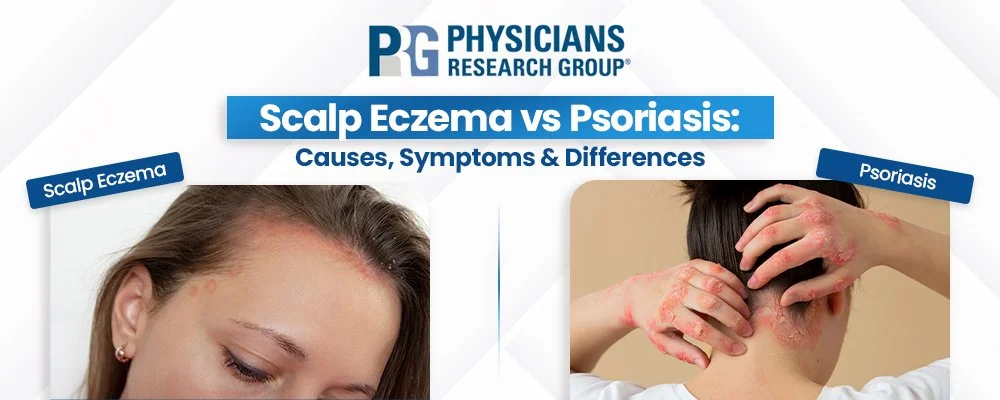
People searching what does scalp eczema looks like may notice persistent itching, flaking, redness, or areas of irritated skin.
The appearance depends on the type of eczema and the person's skin tone. Possible signs include:
Dry, flaky areas across the scalp.
Redness or inflammation, which may appear differently on different skin tones.
Itching that becomes more noticeable after sweating or exposure to irritating products.
Cracked or irritated skin from repeated scratching.
Thickened skin in areas affected by long-term scratching.
Some forms of eczema affecting the scalp may also involve the ears, face, neck, or other areas. Seborrheic dermatitis, which commonly affects oil-producing areas such as the scalp, can also cause flakes and inflammation. It is related to eczema-like scalp symptoms but is a distinct condition.
What Does Scalp Psoriasis Look Like?
Scalp psoriasis often appears as raised, clearly defined patches covered with dry scales. These patches may be visible across the scalp, along the hairline, behind the ears, or at the back of the neck.
Common signs include:
Thick, flaky patches that may have a silvery-white appearance.
Dryness, redness, or inflammation beneath the scales.
Itching, burning, or scalp soreness.
Cracking or bleeding when the skin becomes irritated or scratched.
Temporary hair loss associated with inflammation, scratching, or forceful removal of scales.
Scalp psoriasis can range from a small, localized patch to more extensive areas of involvement. It may also extend beyond the hairline, which can help distinguish it from some other scalp conditions.
However, not everyone experiences the same symptoms. Some people have mild scaling, while others experience thicker plaques and more persistent discomfort.
Scalp Eczema vs Psoriasis Symptoms: How Can You Tell Them Apart?
When comparing Scalp eczema vs psoriasis symptoms, consider the thickness of the scales, the shape of the affected areas, the severity of itching, and whether symptoms occur elsewhere on the body.
Scalp eczema may cause widespread dryness, irritation, and intense itching. The affected skin can become sensitive, particularly after contact with harsh shampoos, fragrances, or other irritants.
Scalp psoriasis more commonly produces defined, raised plaques with thicker scaling. Some people also have psoriasis on their elbows, knees, or other parts of the body, or changes in their fingernails.
However, the difference between scalp eczema and psoriasis is not always clear-cut. Both conditions can itch, become inflamed, and worsen with scratching. Some individuals may also experience overlapping skin conditions.
A dermatologist may diagnose the condition by examining the scalp, reviewing medical history, and asking about symptoms and potential triggers. In uncertain cases, a small skin sample may be needed to help clarify the diagnosis.
Scalp Eczema vs Psoriasis Causes: What Triggers Each Condition?
Understanding Scalp eczema vs psoriasis causes can help explain why the conditions develop and why symptoms may return.
What Causes Scalp Eczema?
Eczema, particularly atopic dermatitis, is associated with impaired skin-barrier function and inflammation. A weakened barrier can make the skin more vulnerable to moisture loss and irritants.
Potential triggers or contributing factors include:
Fragranced shampoos and hair-care products.
Harsh cleansers or other irritating ingredients.
Heat, sweat, and dry environmental conditions.
Allergens or contact reactions to specific products.
Individual susceptibility to inflammatory skin conditions.
Not every trigger affects everyone, and scalp eczema may involve different mechanisms depending on its type.
Also Read: Weeping Eczema: Symptoms, Causes, Treatment, Care, and More
What Causes Scalp Psoriasis?
Psoriasis develops through an abnormal immune response that accelerates skin-cell production. Genetic factors can contribute to susceptibility, although not everyone with psoriasis has a family history of the condition.
Common factors associated with flare-ups include:
Psychological stress.
Certain infections.
Skin injuries or repeated irritation.
Cold or dry weather.
Some medications depend on the individual.
Triggers do not necessarily cause psoriasis in everyone, and the condition is not contagious.
Scalp Eczema vs Psoriasis Treatment: What Are the Options?
The appropriate Scalp eczema vs psoriasis treatment depends on the diagnosis, severity, affected areas, and response to previous treatments.
Because the conditions develop differently, a product that helps one person may not be appropriate for another. A healthcare professional can recommend a treatment plan based on the symptoms and underlying conditions.
Treatment Options for Scalp Eczema:
Treatment generally focuses on reducing inflammation, protecting the skin barrier, and identifying triggers.
Depending on the type and severity, options may include:
Gentle scalp care: Use mild, fragrance-free products when possible and avoid products that irritate the skin.
Moisturizing products: Appropriate emollients may help reduce dryness and support the skin barrier.
Prescription topical treatments: A healthcare professional may recommend a topical corticosteroid or another anti-inflammatory medication when indicated.
Trigger management: Identifying irritating hair products or other contributing factors may help reduce flare-ups.
Persistent or severe symptoms should be evaluated rather than managed through repeated product changes alone.
Treatment Options for Scalp Psoriasis:
Treatment may focus on reducing inflammation, loosening scales, and slowing excessive skin-cell production.
Depending on the severity, a dermatologist may recommend:
Medicated topical treatments: Prescription corticosteroids or other medications designed for psoriasis.
Medicated shampoos: Certain formulations may help manage scaling and scalp symptoms.
Scale-softening products: These can help loosen thick scales when used as directed.
Light therapy: Selected cases may benefit from specific forms of phototherapy.
Systemic medications or biologics: More extensive or difficult-to-manage psoriasis may require treatment that works throughout the body.
Treatment should be individualized. Avoid forcefully scraping or picking scales, as this can irritate the scalp and potentially worsen symptoms.
How to Treat Scalp Eczema and Psoriasis at Home?
If you are researching How to treat scalp eczema and psoriasis, gentle scalp care can help reduce irritation, but home measures do not replace an accurate diagnosis or appropriate medical treatment.
Consider these practical steps:
Choose gentle hair-care products. Avoid products that cause burning, itching, or increased flaking.
Wash according to your scalp's needs. Use a suitable shampoo and avoid excessive scrubbing.
Avoid picking at scales. Forceful removal may damage the skin and cause bleeding.
Track potential triggers. Record changes in symptoms after trying new products or experiencing stress, heat, or other possible triggers.
Follow your treatment instructions. Use medicated shampoos and prescription products according to professional guidance.
Seek medical advice for persistent symptoms. A dermatologist can reassess the diagnosis and adjust treatment when needed.
Seek prompt medical advice if your scalp develops significant pain, spreading redness, drainage, or signs of infection. New or worsening hair loss should also be assessed.
How Clinical Research Supports Skin Condition Treatment
Research continues to investigate potential treatment options for inflammatory skin conditions, including psoriasis and atopic dermatitis. Clinical trials allow researchers to evaluate investigational treatments and gather information about their safety, effectiveness, and tolerability.
Physicians Research Group (PRG Research) conducts clinical research studies in several therapeutic areas, including dermatology.
Depending on eligibility and current study availability, people interested in research may explore:
These studies address specific conditions and eligibility criteria. A study for plaque psoriasis or atopic dermatitis is not necessarily designed specifically for scalp symptoms. Interested individuals should review each study's requirements and speak with the research team to determine whether participation may be appropriate.
Clinical trial participation is voluntary and does not guarantee a particular treatment or outcome.
Exploring New Possibilities for Your Skin?
You may be eligible to participate in a clinical research study evaluating an investigational treatment for atopic dermatitis.
Final Thoughts
Understanding scalp eczema vs psoriasis can help you recognize differences in scalp appearance, possible triggers, and treatment approaches. Eczema may involve dry, irritated skin or greasy flakes, depending on its type, while psoriasis often causes thicker, well-defined patches with dry scaling. However, these signs can overlap, making professional evaluation important.
If itching, inflammation, or scaling continues, consult a dermatologist for an accurate diagnosis and an individualized care plan. With appropriate management, many people can control their symptoms and reduce the impact of flare-ups on daily life.
For those interested in the development of new treatment options, clinical research may also provide an opportunity to learn about investigational approaches, subject to study availability and eligibility requirements.
Frequently Asked Questions
-
Both conditions can cause itching, redness, inflammation, and flaky skin. A dermatologist may need to examine the scalp and consider other symptoms or testing to distinguish them.
-
Both conditions can range from mild to severe. Their impact depends on factors such as the extent of inflammation, symptom intensity, and response to treatment.
-
Both conditions may contribute to temporary hair shedding, particularly when inflammation is significant or scratching damages the scalp. Forcefully removing scales can also cause hair loss. Persistent or patchy hair loss should be evaluated by a healthcare professional.
-
Eczema and psoriasis are not contagious and do not spread through ordinary physical contact. However, other scalp conditions, including some fungal infections, can cause similar symptoms and may require different treatment.