
Weeping Eczema: Symptoms, Causes, Treatment, Care, and More
Key Takeaways
Weeping eczema means eczema is leaking fluid from inflamed, damaged, or blistered skin.
Weeping does not automatically mean the eczema is infected.
Eczema can cause fluid-filled blisters, but infections and other skin conditions can look similar.
Increasing drainage, pain, swelling, pus, spreading redness, or fever can signal an infection and should be evaluated.
Keeping eczema controlled with appropriate skin care and treatment can help protect the skin barrier and reduce severe flares.
Introduction
Your eczema looks different this time. Instead of being only dry, itchy, or flaky, the skin is wet, blistered, or leaking fluid. That can be alarming, especially if you are wondering whether the eczema has become infected.
Weeping eczema describes eczema that leaks fluid from inflamed or blistered skin. It is not a separate type of eczema (atopic dermatitis), and weeping does not automatically mean infection. However, infection can develop when eczema damages the skin barrier, so knowing the difference matters.
Here is what weeping eczema looks like, what causes it, how to treat it, and when it is time to see a doctor.
Quick Answer: Weeping eczema is eczema that leaks clear or yellowish fluid from inflamed, damaged, or blistered skin. The fluid may appear when severe inflammation causes the skin to ooze or when small blisters break. Weeping does not always mean infection, but new or increasing drainage should be checked by a healthcare professional.
What Does Weeping Eczema Look Like?
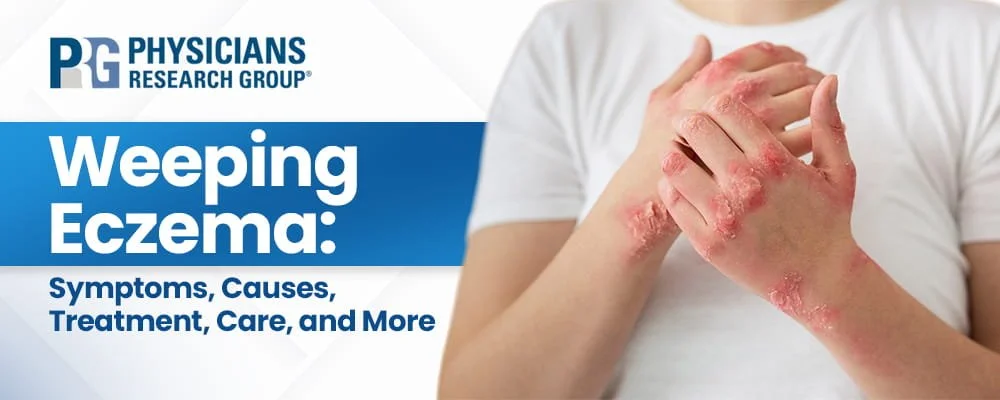
It can look different depending on your skin tone, the type of eczema, and how severe the flare is. You may notice:
Red, brown, purple, or otherwise discolored inflamed skin.
Intense itching or burning.
Small fluid-filled blisters.
Clear or yellowish fluid leaking from the skin.
Raw areas after blisters break.
Crusting after the fluid dries.
Swelling, soreness, or tenderness.
Eczema can produce blisters that ooze and crust over. On darker skin tones, inflammation may look brown, purple, gray, or darker than the surrounding skin rather than bright red.
What Causes Weeping Eczema?
Weeping usually happens when eczema becomes highly inflamed and the skin barrier is disrupted. Inflammation can cause fluid to move into the surrounding tissue and reach the skin surface. Some forms of eczema can also produce small fluid-filled blisters.
Scratching can make the problem worse. It can further damage the skin and create openings through which bacteria, viruses, or fungi can enter.
Eczema is common in the United States. According to the latest CDC National Center for Health Statistics data, 7.7% of U.S. adults had diagnosed eczema in 2024, while 12.7% of children ages 0–17 had diagnosed eczema, with the highest prevalence among children ages 0–5 (14.0%).
Does weeping eczema mean an infection?
Not necessarily.
Eczema can ooze simply because the skin is severely inflamed or blistered. At the same time, broken skin is more vulnerable to infection. Bacterial infections such as impetigo, herpes simplex, and fungal infections can occur alongside eczema.
Weeping eczema symptoms that make infection more concerning include:
Increasing pain or swelling.
Pus or worsening drainage.
Spreading redness or discoloration.
Increasing warmth around the affected area.
Fever or chills.
Feeling generally unwell.
If these symptoms appear, contact a healthcare professional rather than assuming you are dealing with an ordinary eczema flare.
Can Eczema Cause Fluid-Filled Blisters?
Yes. Some forms of eczema can cause small blisters containing clear or yellowish fluid. When these blisters break, the fluid can leak onto the skin and make the area look wet or “weeping.”
For instance, dyshidrotic eczema can cause intensely itchy, fluid-filled blisters, especially on the hands and feet.
However, not every fluid-filled blister is eczema. Contact dermatitis, infections, and other skin conditions can produce similar-looking lesions. A new or unusual blistering rash may need an examination to identify the cause.
Is Weeping Eczema Contagious?
No. Weeping eczema itself is not contagious. You cannot catch eczema from touching someone who has it.
The situation is different if an infection develops on top of eczema. Some infections can spread through contact, depending on the cause. For example, herpes simplex can cause eczema herpeticum, a potentially serious infection in people with eczema.
Painful blisters, fever, fatigue, or rapidly worsening symptoms should be evaluated promptly.
How to Treat Weeping Eczema
Treatment depends on why the skin is weeping, how severe the eczema is, where it appears, and whether an infection is present.
Treat the eczema flare:
The goal is to calm inflammation, reduce itching, protect the skin barrier, and prevent future flares. Depending on the situation, a dermatologist may recommend:
Regular moisturization.
Topical anti-inflammatory treatments.
Wet-wrap therapy for selected flares.
Phototherapy.
Systemic treatment for moderate-to-severe atopic dermatitis.
Treat an infection if one is present:
If a healthcare professional confirms a bacterial, viral, or fungal infection, treatment is chosen based on the cause. Not every case of weeping eczema needs an antimicrobial treatment.
That distinction matters because controlling the eczema and treating an infection are not always the same thing.
Exploring New Possibilities for Your Skin?
You may be eligible to participate in a clinical research study evaluating an investigational treatment for atopic dermatitis.
How to Care for Weeping Eczema at Home
Gentle skin care can help protect the affected area while you follow your treatment plan.
Clean the skin gently and avoid harsh or fragranced products.
Pat the area dry instead of rubbing it.
Avoid scratching, picking, or popping blisters.
Follow your prescribed eczema treatment.
Use moisturizer or a barrier product as directed.
Ask your healthcare professional before trying wet wraps or other home treatments on actively weeping skin.
Keeping eczema moisturized and controlled is an important part of protecting the skin barrier and reducing future flares.
When Should You See a Doctor for Weeping Eczema?
If your eczema starts leaking fluid for the first time, it is worth getting it checked. A dermatologist can determine whether the skin is simply highly inflamed or whether an infection or another condition is involved.
You should also seek medical care if:
The drainage is new or increasing.
Pain, swelling, or warmth is getting worse.
You notice pus or spreading redness.
You develop fever or chills.
You feel unusually tired or unwell.
Your usual eczema treatment is no longer controlling the flare.
The rash develops painful or unusual blisters.
Painful blisters accompanied by fever or feeling unwell can be a sign of eczema herpeticum and require prompt medical attention.
Weeping Eczema vs. Other Skin Problems
Several skin conditions can cause blisters, drainage, or crusting. That is why appearance alone is not always enough to identify the cause.
| Condition | What you may notice | Important clue |
|---|---|---|
| Weeping eczema | Itchy, inflamed skin that leaks fluid | Often occurs during an active eczema flare |
| Infected eczema | Oozing, crusting, swelling, or pain | Pus, spreading redness, or fever may occur |
| Dyshidrotic eczema | Small, intensely itchy blisters | Often affects hands and feet |
| Impetigo | Sores or blisters with crusting | A contagious bacterial skin infection |
| Eczema herpeticum | Painful blisters or sores | Fever and feeling unwell can occur |
These clues can help you understand what you are seeing, but they are not a substitute for a clinical diagnosis.
Can Weeping Eczema Be Prevented?
You cannot always prevent eczema flares, but keeping eczema under control can reduce severe skin breakdown.
Try to:
1. Moisturize regularly.
2. Avoid known irritants and triggers.
3. Keep bathing gentle and avoid very hot water.
4. Avoid scratching as much as possible.
5. Follow your treatment plan during flares.
6. Seek care when your eczema changes or stops responding to your usual treatment.
If eczema continues to flare despite appropriate treatment, your doctor may reassess the diagnosis, triggers, or treatment plan.
Could Clinical Research Help with Difficult-to-Control Eczema?
Sometimes eczema continues to interfere with daily life even when someone is following a treatment plan. Clinical research is one way researchers evaluate potential new approaches for people who meet specific study requirements.
Physicians Research Group (PRG) conducts clinical research in multiple therapeutic areas, including atopic dermatitis. Its dermatology research information currently includes atopic dermatitis studies, although eligibility and study availability vary.
If you want to learn more, you can explore PRG's atopic dermatitis clinical trials and review the requirements for any study that interests you.
Exploring New Possibilities for Your Skin?
You may be eligible to participate in a clinical research study evaluating an investigational treatment for atopic dermatitis.
Related Eczema Resources
Eczema can look different depending on where it appears and what is triggering the irritation. If you are trying to understand a rash around a baby's mouth or chin, PRG's guide to drool rash vs. eczema can help explain how saliva irritation and eczema may look similar. You can also learn more about Physicians Research Group and its approach to clinical research.
Conclusion
Weeping eczema can look much more alarming than a typical dry, itchy flare, but fluid on the skin does not automatically mean infection. The important question is why the skin is weeping and whether there are signs of infection or another skin condition.
With appropriate eczema treatment, gentle skin care, and timely medical evaluation when symptoms change, you can better manage the flare and protect your skin. If eczema remains difficult to control, talking with a dermatologist or learning about appropriate clinical research may give you additional options to discuss with your care team.
FAQs
-
A mild flare may improve with appropriate eczema care, but new or persistent weeping should not be ignored. A healthcare professional can determine whether the drainage is from inflammation, blistering, infection, or another condition.
-
The fluid may be clear or yellowish. Color alone cannot tell you whether eczema is infected. Increasing pain, swelling, pus, spreading redness, or fever are more concerning signs.
-
Eczema is not contagious, so it does not spread from person to person. However, eczema flares can affect multiple areas of the body, and an infection that develops alongside eczema may spread depending on its cause.
-
Moisturization is an important part of eczema care, but actively weeping or broken skin may need individualized care. Ask your healthcare professional which moisturizer or barrier product is appropriate for the affected area.
-
There is no single healing time. Recovery depends on the severity of the eczema, whether an infection is present, the area affected, and how well the skin responds to treatment.
Medical Disclaimer
This article is for general informational and educational purposes only and is not a substitute for professional medical advice, diagnosis, or treatment. Always consult a qualified healthcare professional for advice about your individual health and treatment needs.