
White Spots on Skin: Causes, Symptoms, Treatment, and More
Key Takeaways
White spots can come from several different causes, not just one condition.
Vitiligo is one possible cause, but far from the only one.
Sun exposure doesn't cause every white spot, but it can make existing ones more noticeable.
There's no universal treatment. What works depends on what's actually causing the spots.
Spots that spread, change, or come with other symptoms are worth having checked by a professional.
Finding a new white spot on your skin can bring up a lot of questions. Is it something serious? Will it spread? Does it mean vitiligo?
The truth is, white spots have several possible causes, and vitiligo is only one of them. Some are related to sun exposure. Others come from fungal overgrowth, dry skin, past irritation, or a condition that has nothing to do with your immune system at all.
This guide walks through what white spots can mean, what they tend to look like, and when it may be worth having a dermatologist take a look.
Quick Answer
White spots usually happen when an area of skin makes less melanin than the skin around it or stops making melanin altogether. Melanin is the pigment that gives skin its color, so when it drops in one spot, that area looks lighter or white. A few different things can cause this drop in pigment, including fungal overgrowth, inflammation that has healed, sun-related changes, and autoimmune conditions like vitiligo.
What Causes White Spots on Skin?
Several skin conditions can lead to lighter or white-looking areas. Here are some of the more common ones.
Tinea Versicolor:
This is a common fungal condition caused by an overgrowth of yeast that already lives on most people's skin. It's more common in warm, humid climates and can produce tiny white spots along with patches that look lighter or darker than the surrounding skin. It often shows up on the chest, back, and shoulders, and people frequently notice it after a summer of heat and sweat.
Pityriasis Alba:
Pityriasis alba mainly affects children aged 3 to 16 and usually appears as lighter patches on the face or other sun-exposed areas. It is often associated with dry skin or an eczema tendency and typically fades gradually on its own.
This common skin condition occurs worldwide and affects approximately 5% of children.
Idiopathic Guttate Hypomelanosis:
This condition causes small, round white spots, typically on chronically sun-exposed areas like the forearms and shins. It's considered benign and becomes more common with age. Its exact cause isn't fully understood, though long-term sun exposure and skin aging are thought to play a role.
Post-Inflammatory Hypopigmentation (IGH):
Skin that has recently healed from eczema, psoriasis, an injury, or another irritation can sometimes be left lighter than the surrounding area for a while. This type of pigment change often improves gradually as the skin fully recovers, though the timeline varies from person to person.
Vitiligo:
Vitiligo happens when the cells responsible for producing skin pigment are destroyed, which is generally understood to be an autoimmune process.
The resulting patches tend to have well-defined edges and can appear anywhere on the body, though they're often noticed first on sun-exposed skin. Vitiligo is covered in more detail below, since it's one of the questions people ask about most.
This isn't a complete list of every possible cause, but it covers the ones most commonly connected to searches for "white spots on skin." A dermatologist can help identify which of these, if any, matches what's happening on your skin.
What Do White Spots on Skin Look Like?
White spots can describe a lot of different things, and the details matter more than people often realize.
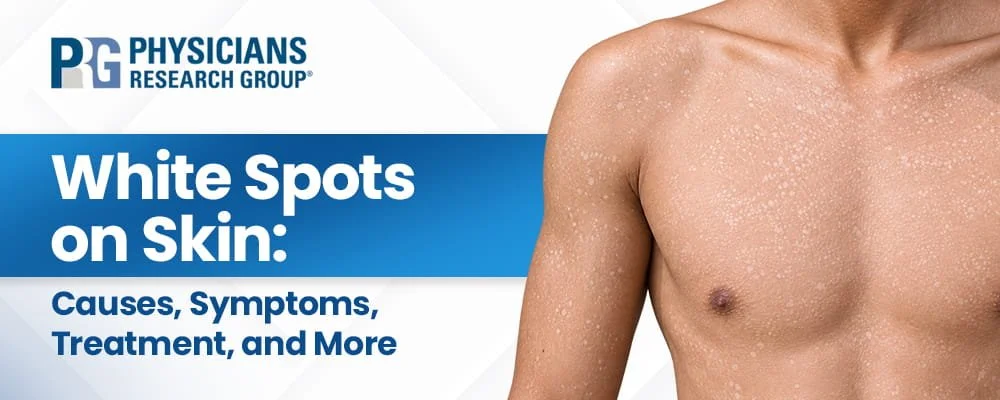
Tiny white spots or white dots may point toward causes like idiopathic guttate hypomelanosis or early tinea versicolor.
Raised white spots are different from flat pigment changes. A raised bump is more likely to be something like a small cyst (milia) or a different skin growth entirely, rather than a pigmentation disorder.
Larger, flat patches with sharp borders are more typical of vitiligo, though not exclusively.
Scaly or slightly rough patches can suggest tinea versicolor or pityriasis alba.
Spots with or without itching don't point to one single cause. Itching is a clue, not a diagnosis on its own.
Because appearance alone can look similar across different conditions, texture, size, location, and pattern all help a healthcare professional narrow things down. This is part of why self-diagnosing from a photo online isn't always reliable, even when the spots look like pictures you've seen before.
Why Do White Spots Become More Noticeable After Sun Exposure?
Sun exposure doesn't create white spots directly, but it can make existing ones more visible. As surrounding skin tans, areas with reduced pigment stay the same shade, so the contrast becomes more obvious.
Why the Contrast Happens
When skin is exposed to the sun, most areas respond by producing more melanin, which is what creates a tan. Areas that already have reduced pigment, whether from tinea versicolor, idiopathic guttate hypomelanosis, vitiligo, or another cause, may not tan the same way. The result is a sharper visual contrast, not a new spot.
What Sun Exposure Does and Doesn't Do
Doesn't cause every white spot. Sun exposure isn't established as a direct cause of most pigment conditions, including vitiligo.
Does make existing spots more visible. Tanned surrounding skin highlights areas that aren't producing pigment the same way.
Can temporarily affect pigment. Sunburn or sun damage may lead to short-term pigmentation changes as skin heals.
What to Do About It
Use daily sunscreen on exposed skin, especially areas with known pigment changes.
Wear sun-protective clothing if spots are widespread or in frequently exposed areas.
Sunscreen won't treat the underlying cause, but reducing contrast can make spots less noticeable.
Avoid intentionally sun-exposing affected skin as a way to try to treat white spots, this isn't a recommended approach.
Are White Spots on Skin a Sign of Vitiligo?
They can be, but white spots do not automatically mean vitiligo.
Tinea versicolor, pityriasis alba, IGH, and post-inflammatory hypopigmentation can all create lighter areas that may look similar to vitiligo.
Some features can provide clues:
Pigment loss: Vitiligo often causes complete loss of pigment, creating milky-white areas.
Borders: Vitiligo patches typically have well-defined edges and normal skin texture.
Pattern: Patches may remain stable or gradually enlarge and appear in new areas.
Hair pigment: Hair growing within an affected area may also lose color in some cases.
Symptoms: Vitiligo is usually painless and does not typically cause itching.
A dermatologist may examine the skin closely and use a Wood's lamp, a special ultraviolet light, to make pigment changes easier to see. Other tests may sometimes be used to support a diagnosis or rule out other conditions.
The important point is simple: vitiligo can cause white patches, but not every white patch is vitiligo.
What About White Spots That Don't Itch?
A lot of people assume that if a spot doesn't itch, it must be harmless. That's not necessarily true. Vitiligo, for example, is mostly asymptomatic, without itching or pain in most cases, yet it's a genuine medical condition worth having evaluated.
On the other hand, some causes of white spots, like tinea versicolor or pityriasis alba, can occasionally come with mild scaling or irritation, even though they're often manageable.
The presence or absence of itching is one small piece of information among several. It doesn't rule conditions in or out by itself, and it isn't a reliable way to decide whether spots need attention.
Can White Spots on Skin Be Treated?
Yes, but treatment depends on the cause.
There is no single treatment for every type of white spot. For example, a fungal infection requires a different approach from vitiligo or post-inflammatory hypopigmentation.
Depending on the diagnosis, treatment or management may include:
Antifungal treatment for conditions such as tinea versicolor.
Moisturizing and addressing underlying irritation or dryness in conditions such as pityriasis alba.
Time and supportive skin care for some cases of post-inflammatory hypopigmentation.
Dermatologist-guided treatment for vitiligo.
Vitiligo treatment varies based on factors such as age, affected areas, extent of pigment loss, disease activity, and personal preferences. Some treatments aim to slow progression, while others focus on restoring pigment.
Results vary, and no treatment guarantees complete repigmentation.
How to Get Rid of White Spots on Skin
The best way to get rid of white spots starts with finding out what is causing them.
Get an accurate diagnosis. A dermatologist can examine the spots and consider your medical and skin history.
Treat the underlying cause. Treatment may involve addressing an infection, inflammation, or pigment disorder.
Protect your skin from the sun. Sunscreen and protective clothing can reduce contrast and help protect areas with reduced pigment.
Monitor changes. Some conditions improve gradually, while others may spread or require ongoing management.
Avoid harsh or unproven home remedies. Applying irritating ingredients to already-affected skin can make the problem worse.
When Should You See a Dermatologist?
Most white spots aren't an emergency, but certain patterns are worth having looked at. Consider scheduling an evaluation if you notice:
New, unexplained white spots that weren't there before.
Spots that appear to be spreading or growing.
Pigment changes affecting hair in the same area.
White patches showing up in more than one location on the body.
Scaling, redness, irritation, or discomfort alongside the spots.
Spots that persist for weeks without improving.
General concern about whether the spots could be vitiligo.
None of these signs mean something serious is definitely happening. They're simply situations where a dermatologist's exam can offer more clarity than continuing to guess.
Could White Spots Be Related to Vitiligo?
If a dermatologist has identified vitiligo as the cause of white patches, you may also want to learn about ongoing research into potential treatment options.
Researchers continue to study vitiligo and investigate new approaches. Clinical trials evaluate investigational treatments while monitoring participant safety and well-being.
PRG currently has a pediatric vitiligo clinical research study for children ages 2 to 12. The study evaluates a potential treatment for children living with vitiligo while monitoring their safety and overall health.
Parents or caregivers can learn more about the pediatric vitiligo clinical research study or contact PRG to ask about available research opportunities.
Conclusion
White spots on skin can look concerning, but they don't always mean vitiligo. Several conditions can cause changes in skin color, and they may require very different approaches.
If you're wondering, “Why you have white spots on your skin”, pay attention to changes in their size, shape, texture, and location. If they persist, spread, or leave you unsure about the cause, a dermatologist can help you get a clearer answer.
An accurate diagnosis is the first step toward knowing whether the spots need treatment, monitoring, or simply time to fade.
Frequently Asked Questions
-
Common causes include tinea versicolor, pityriasis alba, idiopathic guttate hypomelanosis, post-inflammatory changes, and vitiligo.
-
No. Several conditions can cause lighter or white patches, so a dermatologist can help identify the cause.
-
Sun exposure can darken the surrounding skin, making existing lighter spots more noticeable.
-
Not necessarily. Some conditions, including vitiligo, often cause white spots without itching.
-
Consider an evaluation if spots are new, spreading, changing, persistent, or accompanied by scaling or irritation.
-
Yes. Vitiligo can affect children as well as adults, and some families may also explore clinical research options.