
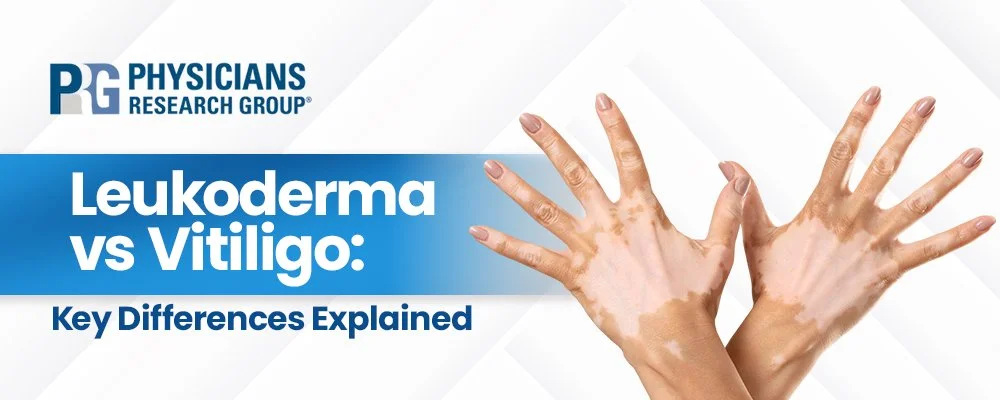
Leukoderma vs Vitiligo: Key Differences Explained
Key Takeaways
Leukoderma is the umbrella term for any loss of skin color, and vitiligo is one autoimmune type of it that affects an estimated 0.5% to 1% of people worldwide.
Paper-white, symmetrical patches on the hands, face, or around body openings, especially with white hair inside them, point toward vitiligo.
Phenols in hair dye and rubber, old burns or eczema, tinea versicolor, and leprosy can all cause white patches that look like vitiligo but need different care.
A Wood's lamp exam and a KOH skin scraping often settle the diagnosis in one visit.
Quick answer
Leukoderma is any loss of skin color, caused by things like chemicals, burns, infections, or eczema. Vitiligo is one specific type: an autoimmune condition in which the immune system destroys pigment cells, leaving milk-white patches that can spread. Many other forms of leukoderma fade once the cause is treated. Vitiligo usually needs long-term care.
Introduction
You spot a pale patch on your hand, look it up, and two words keep coming back: leukoderma and vitiligo. Some websites treat them as the same thing. Others insist they're completely different. Both camps are partly right, and that's the problem.
The leukoderma vs vitiligo question matters because the cause of a white patch decides what happens next. Some patches fade on their own in a few months. Others keep spreading for years without the right care. Below, we break down how to tell them apart and what each one means for treatment.
Is Leukoderma the Same as Vitiligo?
No. Leukoderma is the broad medical term for skin that has lost its color, and vitiligo is one specific cause of it. Every case of vitiligo counts as leukoderma, but plenty of leukoderma has nothing to do with vitiligo. A healed burn, a reaction to hair dye, or a fungal rash can all leave pale skin behind.
Most of the mix-up comes from everyday language. In India and other parts of South Asia, people often use "leukoderma" as another name for vitiligo. So two people can say the same word and mean different things.
That gap causes real trouble.
Vitiligo alone affects an estimated 0.5% to 1% of people worldwide, according to MedlinePlus Genetics from the U.S. National Library of Medicine. That's tens of millions of people. Add everyone with other kinds of pale patches, and you get a lot of folks searching leukoderma vs vitiligo late at night, fearing the worst.
Some end up putting vitiligo creams on a fungal infection. Others ignore a patch that keeps quietly growing. And where vitiligo still carries stigma, a wrong guess means months of needless worry.
The Difference Between Vitiligo and Leukoderma at a Glance
The difference between vitiligo and leukoderma comes down to scope. One names a specific disease, and the other describes a symptom with many possible causes. Here's how they compare on the points dermatologists actually check.
| Feature | Leukoderma (other causes) | Vitiligo |
|---|---|---|
| What it is | Any loss of skin color, from many causes | An autoimmune condition; one type of leukoderma |
| Main cause | Chemicals, burns, injury, rashes, infections, genetics | Immune system attacks melanocytes (pigment cells) |
| Patch color | Often a shade lighter; sometimes fully white | Usually chalk-white or milk-white |
| Pattern | Matches the trigger: contact area, old injury or rash site | Often symmetrical; common on face, hands, feet and around body openings |
| Spread | Usually stops once the cause is gone | Can spread over months or years |
| Wood's lamp | Often duller contrast (chemical leukoderma can look the same) | Bright blue-white glow with sharp edges |
| Outlook | Many types fade or improve over time | Long-term; treatment can bring color back |
One row needs a caveat. Chemical leukoderma can look almost identical to vitiligo, and some people go on to develop true vitiligo after the exposure, with new patches far from where the chemical touched. That's why pattern and spread over time matter as much as color.
Leukoderma vs Vitiligo Symptoms: What Do the Patches Look Like?
Leukoderma vs vitiligo symptoms look alike at first, since both show up as pale patches that rarely itch or hurt. The details are what set them apart.
Signs that lean toward vitiligo:
A paper-white color, not just a shade lighter than your normal skin.
Matching patches on both sides of the body, like both hands or both knees.
Spots around the eyes, mouth, nostrils, fingertips, elbows, or genitals.
White or gray hair growing inside a patch, including eyebrows and eyelashes.
New patches at cuts, scrapes, or friction points (doctors call this the Koebner phenomenon).
A personal or family history of thyroid disease or another autoimmune condition.
There's one exception to the symmetry rule. Segmental vitiligo stays on one side of the body, often in a band, and usually starts earlier in life.
Other leukoderma tends to leave clues tied to its cause. A patch from rubber footwear sits exactly where the strap rubbed. Patches after eczema follow the outline of the old rash. Fungal spots often look faintly scaly and show up more clearly after a summer tan.
One sign needs a doctor soon: a pale patch that feels numb. Loss of feeling points away from vitiligo and toward conditions like leprosy, which still turns up in parts of the world and needs prompt treatment. (It's rare in the U.S., but dermatologists still check.)
What Causes White Patches Similar to Vitiligo?
Chemical exposure, past skin damage, certain infections, and a few conditions people are born with can all cause white patches similar to vitiligo. Comparing leukoderma vs vitiligo causes is often the quickest way to tell them apart. Vitiligo has one main driver: the immune system attacking melanocytes, the cells that make pigment.
Chemicals and contact:
Some chemicals kill pigment cells on contact. The usual suspects are phenols and catechols, found in certain hair dyes, rubber products, adhesives, and industrial cleaners. Bindi adhesive and rubber sandal straps are classic examples. Patches show up where the product touched skin, at least at first.
Past skin damage:
Burns, deep cuts, freezing treatments and some laser procedures can leave lighter skin behind. So can flare-ups of eczema or psoriasis. Doctors call this post-inflammatory hypopigmentation, and it often evens out over several months.
Infections:
Tinea versicolor, a common yeast overgrowth, causes pale, slightly scaly spots on the chest, back, and shoulders. Leprosy causes pale patches with numbness. Both need medicine aimed at the germ, not vitiligo treatment.
Conditions present from birth or childhood:
Nevus depigmentosus is a pale patch present from birth or early childhood that stays stable and doesn't spread. Piebaldism, a genetic condition, often shows up as a white forelock of hair. In kids, pityriasis alba causes faint, dry pale patches on the face that usually clear up by themselves.
How Do Dermatologists Tell Them Apart?
A dermatologist can usually separate vitiligo from other leukoderma in a single visit with a few quick tests. A typical workup looks like this:
History. When the patches started, what touched your skin, past rashes or injuries, and whether thyroid disease or vitiligo runs in the family.
Wood's lamp exam. A handheld UV light in a dark room. Vitiligo glows bright blue-white with crisp edges, while partly pale patches look duller. Some fungal infections give off a yellow-green or coppery glow.
Skin scraping (KOH test). A gentle scrape goes under the microscope to look for yeast.
Sensation check. Light touch with cotton or a pin tip rules out numbness.
Blood work. Thyroid tests are common, since autoimmune thyroid disease often shows up alongside vitiligo.
Biopsy, only if needed. A tiny skin sample shows whether pigment cells are missing entirely, which fits vitiligo.
For most people weighing leukoderma vs vitiligo, steps 2 and 3 settle it.
Leukoderma vs Vitiligo Treatment: Why the Cause Decides the Plan
Doctors treat most leukoderma by removing or fixing its cause, while vitiligo needs care aimed at the immune system and the pigment cells themselves.
For other forms of leukoderma, the plan is often simple. Stop using the product that caused the reaction. Treat tinea versicolor with antifungal cream or shampoo, though skin color can take weeks to months to even out after the yeast is gone. Leprosy needs multidrug therapy from a doctor.
Post-inflammatory patches usually return to normal on their own, and daily sunscreen keeps the skin around them from tanning and making the contrast worse. Vitiligo care takes more patience. A dermatologist builds the plan around your age, where the patches are, and how fast they’re spreading, and it often takes months to see color return.
Results from the common treatment methods depend a lot on location. The face and neck usually respond best. Hands and feet are famously slow, partly because they have fewer hair follicles, and follicles act as a reservoir for new pigment cells.
How Physicians Research Group Supports Vitiligo Research
New vitiligo treatments reach patients through clinical trials, and that research is still moving forward.
At Physicians Research Group (PRG), our team runs clinical studies that give volunteers access to investigational treatments under close medical supervision. If you're living with vitiligo, or still sorting out the leukoderma vs vitiligo question for your own skin, a study could be worth a look.
Help Us Learn More About Pediatric Vitiligo
Your child may have an opportunity to take part in research focused on new treatment options.
Conclusion
Leukoderma covers every kind of lost skin color, and vitiligo is one autoimmune cause within it. Chalk-white, symmetrical patches that spread point toward vitiligo. Patches tied to a chemical, an old injury, a rash, or an infection usually point somewhere else, and many of those fade once the cause is handled.
You don't have to settle the leukoderma vs vitiligo question alone. A dermatologist can usually sort it out in one visit. If you're living with vitiligo and want to contribute to better potential treatment options, contact Physicians Research Group.
Frequently Asked Questions
-
No, vitiligo and most other forms of leukoderma don't spread through touch. Vitiligo comes from the immune system attacking pigment cells, and chemical or post-inflammatory patches stay with the person who has them. Leprosy is the exception to know about: it causes pale, numb patches and spreads only through close, long-term contact.
-
Sometimes. Chemical leukoderma, caused by substances like phenols in hair dye or rubber, can trigger true vitiligo in some people, with new patches appearing far from the contact area. Most other leukoderma, such as patches after burns or eczema, stays in place and often fades over several months.
-
You can spot clues at home, but you can't confirm the cause. Vitiligo patches are usually chalk-white, symmetrical, and may have white hair inside. Other leukoderma often sits exactly where a chemical, rash, or injury touched the skin. A dermatologist's Wood's lamp exam gives a far clearer answer.