
Psoriasis Around the Eyes: Causes, Symptoms, and Treatment
Key Takeaways
Psoriasis around the eyes is uncommon but not rare, and it usually shows up alongside psoriasis elsewhere on the body.
Early stage eye psoriasis often looks like dry, flaky skin and gets mistaken for eczema or plain irritation.
Eyelid skin is thin, so strong steroid creams can cause side effects like thinning skin or glaucoma if used carelessly.
Cold compresses, fragrance-free moisturizers, and dermatologist-approved treatments help manage flares.
Untreated psoriasis near the eyes can affect eyelashes, eyelid shape, and in rare cases, the eye itself.
Quick Answer: Psoriasis around the eyes shows up as red, flaky, or scaly patches on the eyelids, brow bone, or under-eye skin. It happens when the immune system speeds up skin cell turnover in a spot where the skin is already thin and sensitive. Flares here can cause itching, swelling, and even eyelash loss if left untreated.
Mild cases respond to gentle moisturizers and low-strength topical treatment, but persistent or spreading patches usually need a dermatologist's input, since the eye area doesn't tolerate every psoriasis cream.
Picture this. You wake up, glance in the mirror, and notice your eyelid looks swollen, red, and strangely scaly. You didn't sleep badly. You didn't get hit with allergies. What you're looking at might be psoriasis around the eyes, and it's more common than most people realize. This blog breaks down why it happens, what it looks like, and how to calm it down before it spreads further.
Can Psoriasis Affect the Eyes?
Yes, psoriasis can affect the eyes, though it's less common than psoriasis on the elbows, knees, or scalp. When people ask can psoriasis affect the eyes, the honest answer is: it usually affects the skin around the eyes first, not the eyeball itself.
The eyelids, brow area, and under-eye skin can all develop plaques. In rarer situations, psoriasis triggers inflammation inside the eye, leading to conditions like uveitis or conjunctivitis. That's why dermatologists take psoriasis around the eyes seriously, even when the patch looks small.
A few quick facts worth knowing:
Roughly 10% of people with psoriasis develop some form of eyelid involvement over their lifetime.
People with psoriatic arthritis have a higher chance of eye-related complications.
Eye symptoms don't always appear at the same time as skin flares elsewhere.
What Causes Eyelid Psoriasis?
What causes eyelid psoriasis comes down to the same root issue behind psoriasis anywhere else: an overactive immune response that tells skin cells to multiply faster than normal. Instead of shedding every few weeks, the skin builds up in days, forming those telltale scaly patches.
Around the eyes specifically, a few triggers tend to show up more often:
Stress: Emotional or physical stress is one of the most reported flare triggers.
Skincare products: Harsh cleansers, retinoids, or fragranced creams near the eyes can irritate already-sensitive skin.
Cold, dry weather: Winter air strips moisture fast, and eyelid skin has almost no oil glands to compensate.
Rubbing or scratching: Mechanical irritation (the Koebner phenomenon) can trigger new plaques at the site of injury.
Genetics: A family history of psoriasis raises the odds significantly.
Understanding what causes eyelid psoriasis matters because avoiding known triggers is often the first line of defense, before any medication enters the picture.
Early-Stage Eye Psoriasis: What to Watch For
Early-stage eye psoriasis rarely looks dramatic. It starts small. A little redness along the lash line. Slight flaking that looks like dry skin. Maybe a bit of puffiness that doesn't go down overnight.
This is exactly why so many people miss it or mistake it for something else, like allergies, conjunctivitis, or plain dryness. Catching it early matters, since treating it right away tends to prevent bigger complications, like eyelash thinning or eyelid margin changes.
Watch for these early clues:
Mild redness that doesn't respond to regular moisturizer
Fine, silvery flakes near the lash line
Itching that's more persistent than typical dry skin
Skin that feels tight or slightly raised to the touch
If these signs stick around longer than a week or two, it's worth getting checked rather than waiting it out.
What Does Psoriasis Around the Eyes Look Like?
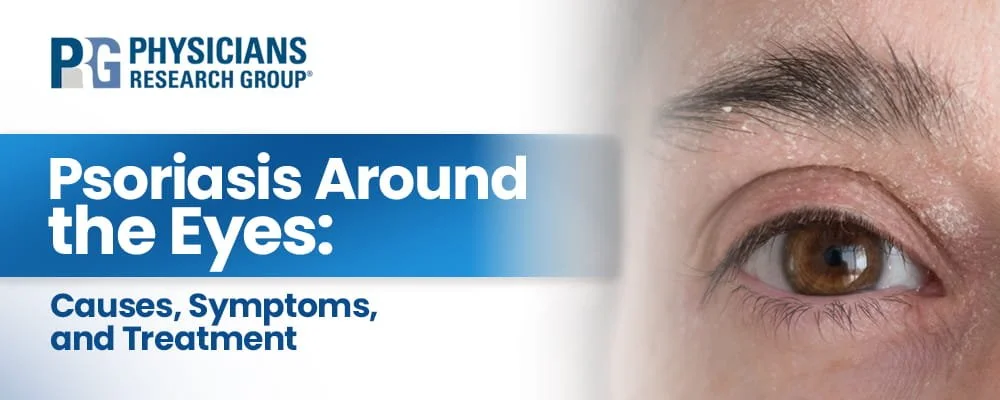
So, what does psoriasis around the eyes look like in practice? It's not always the thick, silvery-scaled plaque you'd see on an elbow. Eyelid skin is thinner, so the patches often appear flatter, pinker, and less scaly than psoriasis elsewhere.
Common visual signs include:
Red or dusky pink patches on the eyelid or brow bone
Fine white or silvery scale, sometimes barely visible
Swelling along the eyelid margin
Cracked or fissured skin in more severe flares
Skin that looks shiny or slightly thickened over time
Because psoriasis around the eyes can resemble eczema, seborrheic dermatitis, or even styes, a lot of people go months without an accurate diagnosis. A dermatologist can usually tell the difference through a physical exam, and sometimes a small skin scraping if the picture isn't clear.
Signs of Psoriasis Around Eyes
Beyond the visual patches, there are functional signs of psoriasis around eyes that people notice day to day. Psoriasis around eyes symptoms go beyond "it looks red."
Eyelashes that fall out or grow in unevenly
Eyelid margins that turn inward or outward (ectropion or entropion in severe, long-term cases)
A gritty, irritated feeling, similar to having something in the eye
Sensitivity to light during active flares
Skin that cracks at the outer corner of the eye
Psoriasis around eyes symptoms tend to worsen with rubbing, so the itch-scratch cycle makes things worse fast. Recognizing these signs early, rather than brushing them off as tiredness or allergies, makes treatment far more effective. That overlap with other eye and skin conditions is exactly why self-diagnosis is risky here.
How to Treat Psoriasis Around Eyes
Figuring out how to treat psoriasis around eyes starts with one rule: this is delicate skin, so nothing harsh goes near it without a dermatologist's sign-off.
At-home care that helps:
Fragrance-free, hypoallergenic moisturizers applied several times a day
Cool compresses to reduce swelling and calm itching
Avoiding known triggers like harsh cleansers or excessive rubbing
Gentle cleansing instead of scrubbing during flares
Medical treatment options:
Low-potency topical corticosteroids, used only for short periods near the eyes
Calcineurin inhibitors (like tacrolimus or pimecrolimus), which don't carry the same skin-thinning risk as steroids
Phototherapy for more widespread involvement, done under supervision
Systemic treatments (biologics or oral medications) when psoriasis is moderate to severe and affects multiple areas, not just the eyes
Learning how to treat psoriasis around eyes isn't a one-size-fits-all process. What clears a mild patch on one person might barely touch a stubborn flare on someone else. That's part of why ongoing research into psoriasis treatment keeps evolving.
Ready to Explore New Options for Plaque Psoriasis?
Clinical research may offer access to investigational treatments while helping advance psoriasis care.
When It's Time to See a Specialist
A general moisturizer might handle a mild flare. But when this condition keeps coming back, spreads, or starts affecting eyelash growth or vision comfort, it's time for a professional opinion, not another internet search.
This is also where clinical research plays a role. New treatments for moderate to severe plaque psoriasis are being studied right now, and people who don't respond well to standard creams sometimes find better options through a clinical trial. Physicians Research Group runs active studies for plaque psoriasis, giving patients access to emerging treatments under close medical supervision.
FAQs
-
Description tIn most cases, psoriasis around the eyes stays limited to the skin on the eyelids and brow area. Direct eye involvement, like uveitis, is rare but more likely in people who also have psoriatic arthritis. ext goes here
-
Yes, in most cases. Catching it early and starting gentle treatment usually prevents long-term changes to the eyelid or eyelashes.
-
Eczema tends to be itchier and more weepy, while psoriasis around the eyes usually shows more defined, slightly raised patches with finer scale. A dermatologist can confirm which one it is.
-
Stress is a well-documented trigger, though it rarely acts alone. It usually combines with genetics or other environmental factors already at play.
Conclusion
Psoriasis around the eyes can feel frustrating, especially since the skin there is so visible and so sensitive. But with the right care plan, most people bring flares under control and avoid long-term eyelid changes.
Physicians Research Group has spent years connecting patients with clinical research that pushes treatment options forward. If standard treatments haven't worked for your psoriasis around the eyes, exploring a clinical trial might open doors that a pharmacy shelf can't. Learn more about PRG and how our team approaches patient care, or reach out directly to ask whether a current study fits your situation.
Disclaimer: This blog is for informational purposes only and doesn't replace professional medical advice. This condition should always be evaluated by a qualified dermatologist or your treating physician before starting any new treatment, especially given how sensitive the eye area is to strong medications.